Chasing Light: A Photographer's Guide to the Li River
The exact spots, times, and seasons to capture the Li River at its most magical.
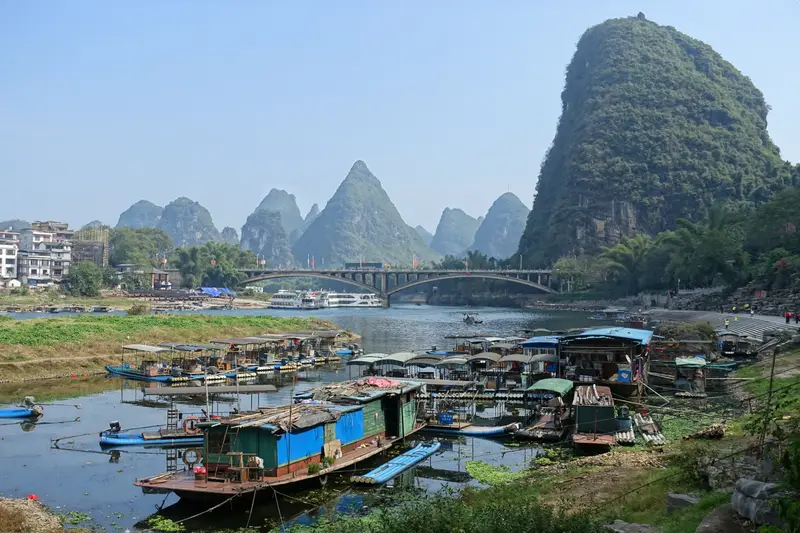
The Li River between Guilin and Yangshuo is one of the most photographed landscapes in China — the karst peaks rising from the mist, the bamboo rafts drifting on emerald water, the cormorant fishermen silhouetted against the setting sun. It's the image on the 20 RMB note, and it's every bit as beautiful as the postcards suggest.
But photographing it well requires timing, patience, and knowing where to stand. Here is everything you need to know.
When to Go
April to October is the best window, but each season offers something different. April-May brings the famous mist — warm, humid air meeting the still-cool river creates ethereal fog that wraps around the peaks at dawn. June-August is lush and green but can be rainy. September-October has the clearest skies and the best golden hour light.
Avoid November-March — the river is low, the foliage is sparse, and the light is flat.
The Best Locations
Xingping (兴坪). This is the 20 RMB note viewpoint — the most iconic stretch of the river. Arrive at 5:30am for sunrise. The best spot is the viewing platform on the west bank, a 20-minute walk from Xingping town. Bring a tripod — the light is low at dawn and you'll want a long exposure to smooth the water.
Xianggong Hill (相公山). A 15-minute climb up stone steps leads to a viewing platform with a panoramic view of the river bending through a forest of karst peaks. This is the money shot for sunrise. There is a small entry fee. Get there by 5:15am to claim a spot on the railing — it gets crowded by 5:45am.
Yangdi to Xingping hike. The 16 km riverside trail is the best way to find compositions no one else has. You'll pass bamboo groves, water buffalo, and fishermen who still use cormorants. The light is best from 7am to 10am.
Arrive at 5:30am. The light is low at dawn and you'll want a long exposure to smooth the water. Bring a tripod.
The Cormorant Fishermen
The cormorant fishermen on the Li River are mostly for show now — real cormorant fishing died out decades ago — but they make for extraordinary photographs. The fishermen and their birds are available for hire for a morning session. The best setup is at Xingping at dawn, with the fisherman on his bamboo raft, the birds poised on the bow, and a single lantern casting golden light on the scene.
Gear Recommendations
A wide-angle zoom (16-35mm) is your primary lens for the big landscape shots. A 70-200mm is essential for isolating individual peaks and compressing the layers of karst formations. A polarising filter helps cut through the haze and deepen the greens. And a sturdy tripod is non-negotiable for dawn and dusk work.
Most importantly: bring patience. The Li River's best moments come in the 15 minutes before and after sunrise. If you miss it, you wait until tomorrow. That's the deal.